DIACETYLENES
Materials for time-temperature and radiation indicators
DIACETYLENES (DA): WHERE REACTIONS OCCUR IN THE SOLID STATE
A SEEING IS BELIEVING SYSTEM
Dr. GORDHAN PATEL IS ONE OF THE FEW PIONEERS
As movements of molecules are required, typically, chemical reactions occur in the gas or liquid states. There are only a small number of chemical reactions occur in the solid state. Diacetylenes are a unique class of solid compounds/monomers. They polymerize in the solid state to form highly colored (blue or red) polymers. A large number of reactions of diacetylenes and polydiacetylenes are associated with color changes and hence it is an ideal system for teaching polymer science (J. Chem. Ed. 60, 181 (1983)). Because of unique structural, electronic and optical properties, a large number of products such as biosensors and chemosensors, radiochromic dosimeters, smart inks, paints, and counterfeiting materials, nanostructures (nanotubes and nanowires), nonlinear optics, photocatalysis and pharmaceutical and organic synthesis are proposed in the literature.
Though the color development of diacetylenes is known since 1910, little attention was paid to them till Professor Gerhard Wagner of Germany showed that it is a topographic polymerization in the solid state. Ray Bachmann in Honeywell, Morris Twon, NJ/USA started exploring applications of diacetylenes in 1971. Dr. Patel Joined Dr. Baughman’s group in 1974 and he has been working on diacetylene since then. Dr. Patel has ~40 patents and ~40 research papers on diacetylenes. He pioneered development of a number of products based on diacetylenes, such as time-temperature indicators, radiation dosimeters, freeze indicators, thaw indicators and toxic chemical detectors. Products like time-temperature indicators and radiation monitoring devices are commercially available and the market has reached in hundreds of millions of dollars per year.
Dr. Patel has been working on diacetylenes since 1974 (50 years).
R-C≡C-C≡C-R
R is a substituent group
Most diacetylenes are solid.
SYNTHESIS & EXAMPLES OF SUBSTITUENT GROUPS OF DIACETYLENES
We have synthesized approximately 200 new DAs.
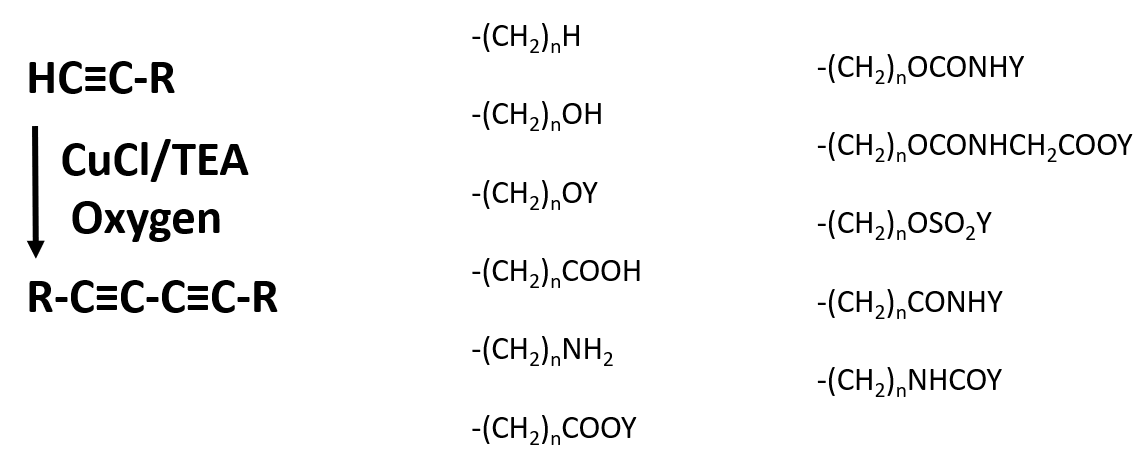
Where Y is a substituted or unsubstituted aliphatic or aromatic functionality.
Where R is a substituent group.
DIACETYLENES – HISTORICAL
- Color development of R-C≡C-C≡C-R known since 1910.
- Ignored as unstable compounds.
- Solid state polymerization explained by Wegner, 1969.
- Monomers: Colorless solids.
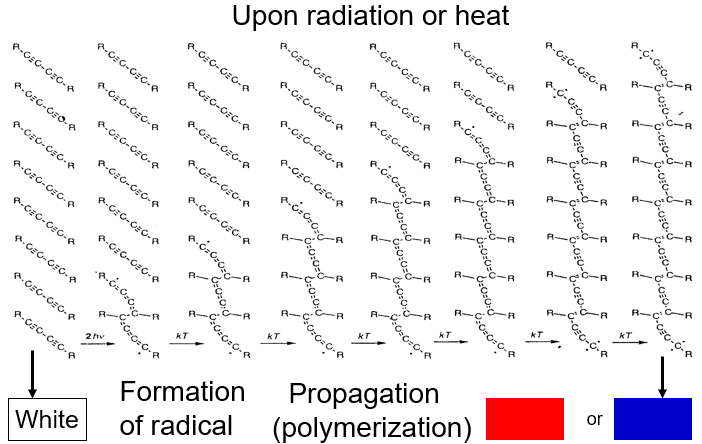
- Polymerization: Upon radiation and heat.
- Polydiacetylenes: colored (blue or red).
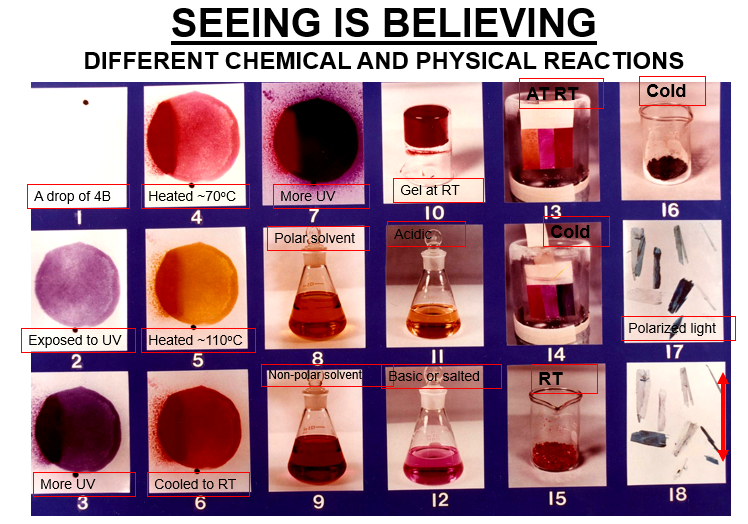
- Most of the physical and chemical reactions of diacetylenes and polydiacetylenes can be seen because they are associated with a color change.
PIONEERS OF DIACETYLENES



POLYMERIZATION OF DIACETYLENES, R-C≡C-C≡C-R
MONOMERS: COLORLESS SOLID
POLYDIACETYLENES: COLORED (BLUE) OR (RED)
Diacetylene molecules are packed like steps of a ladder in their crystals.
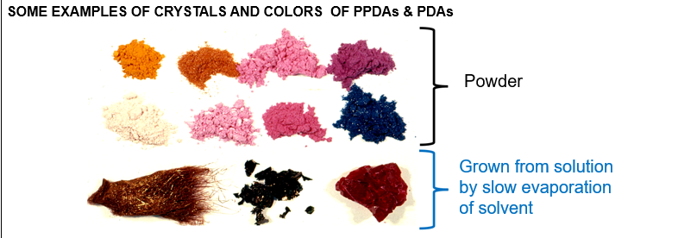
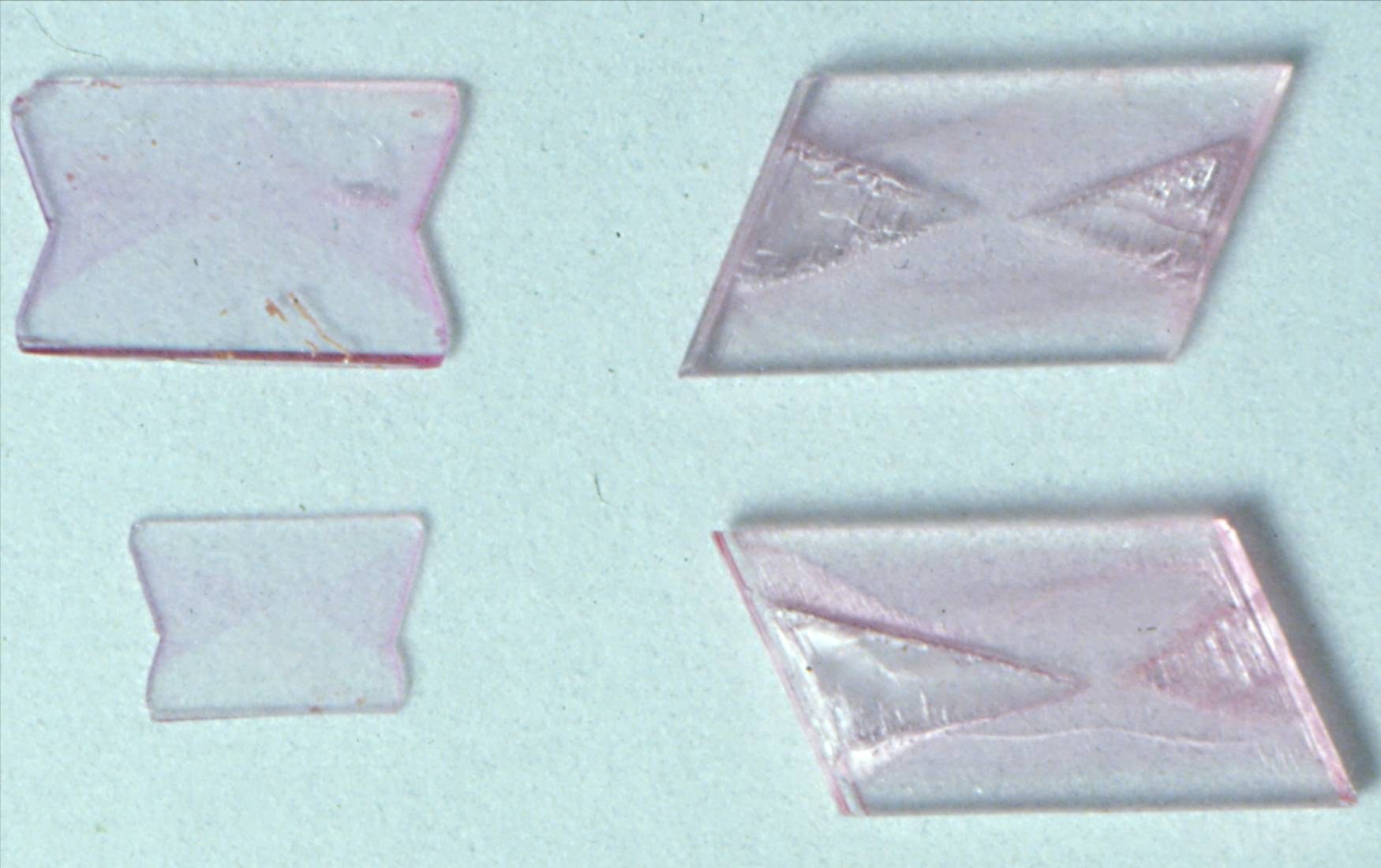
LARGE CRYSTALS OF A DIACETYLENE (PTS, R=CH2-OSO2-Ph)
~0.1g to 1g crystals of PTS grown from solution by controlled slow evaporation of solvent
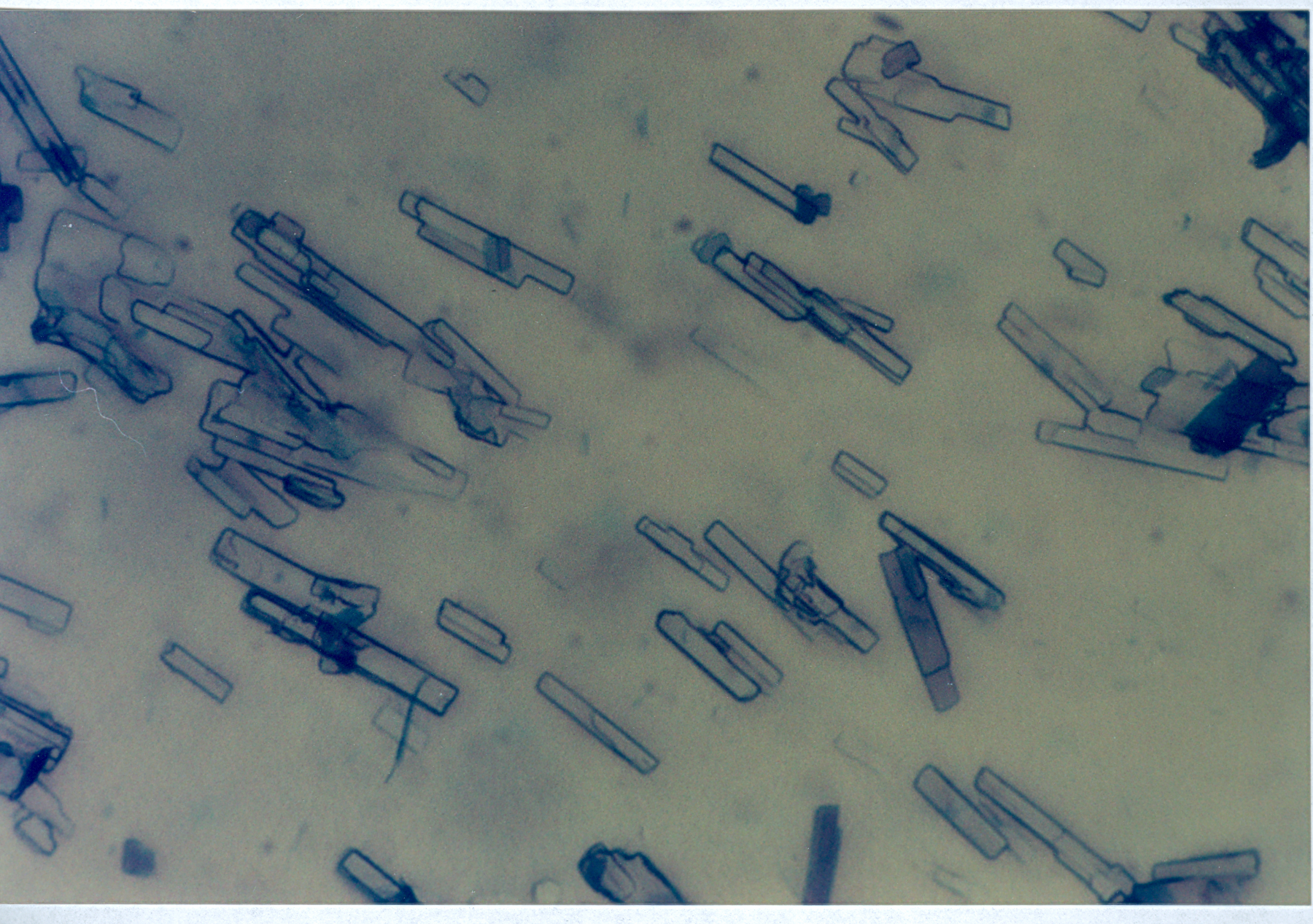
OPTICAL MICROGRAM OF CRYSTALS OF A DA
~1-micron thick crystals of a DA grown by cooling a from a polymer solution
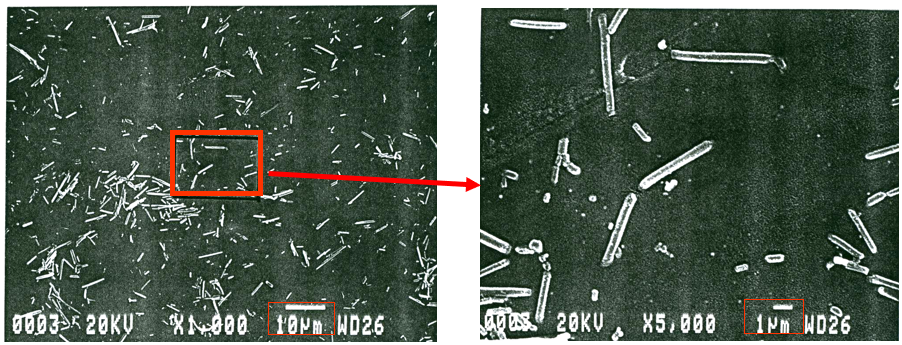
SCANNING ELECTRON MICROGRAM OF CRYSTALS OF A DA
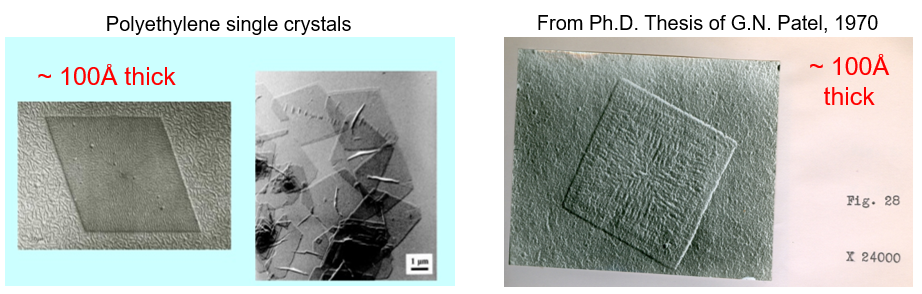
EXTREMITY OF POLYMER SINGAL CRYSTALS
World’s largest polymer single crystal, ~4 mm dimeter ~10 cm long grown from melt by Zakroski method, polymerized by gamma ray
UNIQUE PROPERTIES OF DIACETYLENES
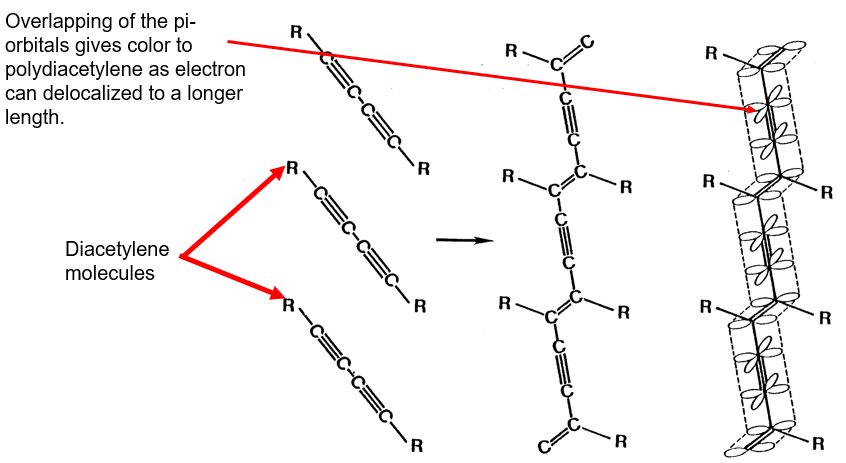
OVERLAPPING OF THE pi-ORBITALS OF BACKBONES OF POLYDIACETYLENES
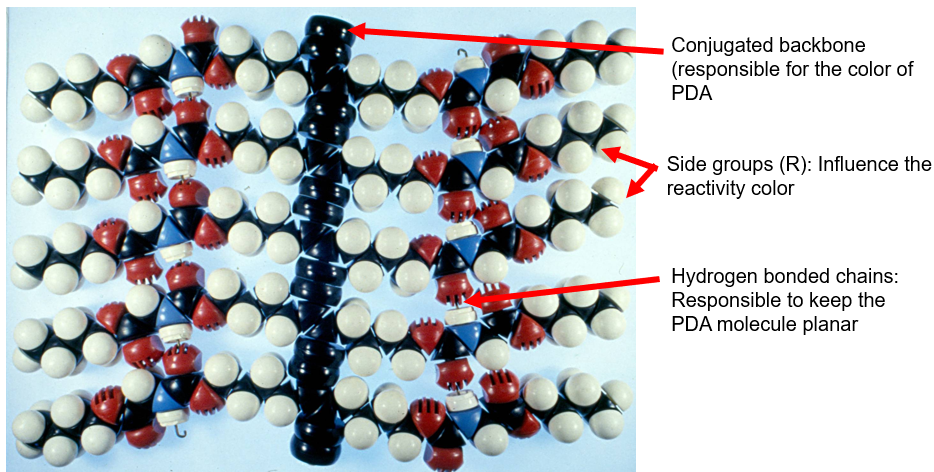
MOLECULAR MODEL OF POLY4BCMU (R=(CH2)4-O-CO-NH-CH2-CO-O-(CH2)3-CH3)
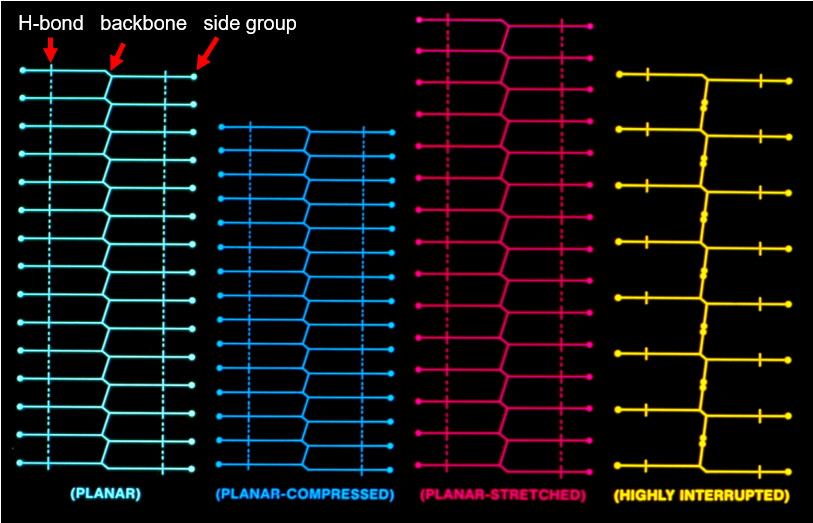
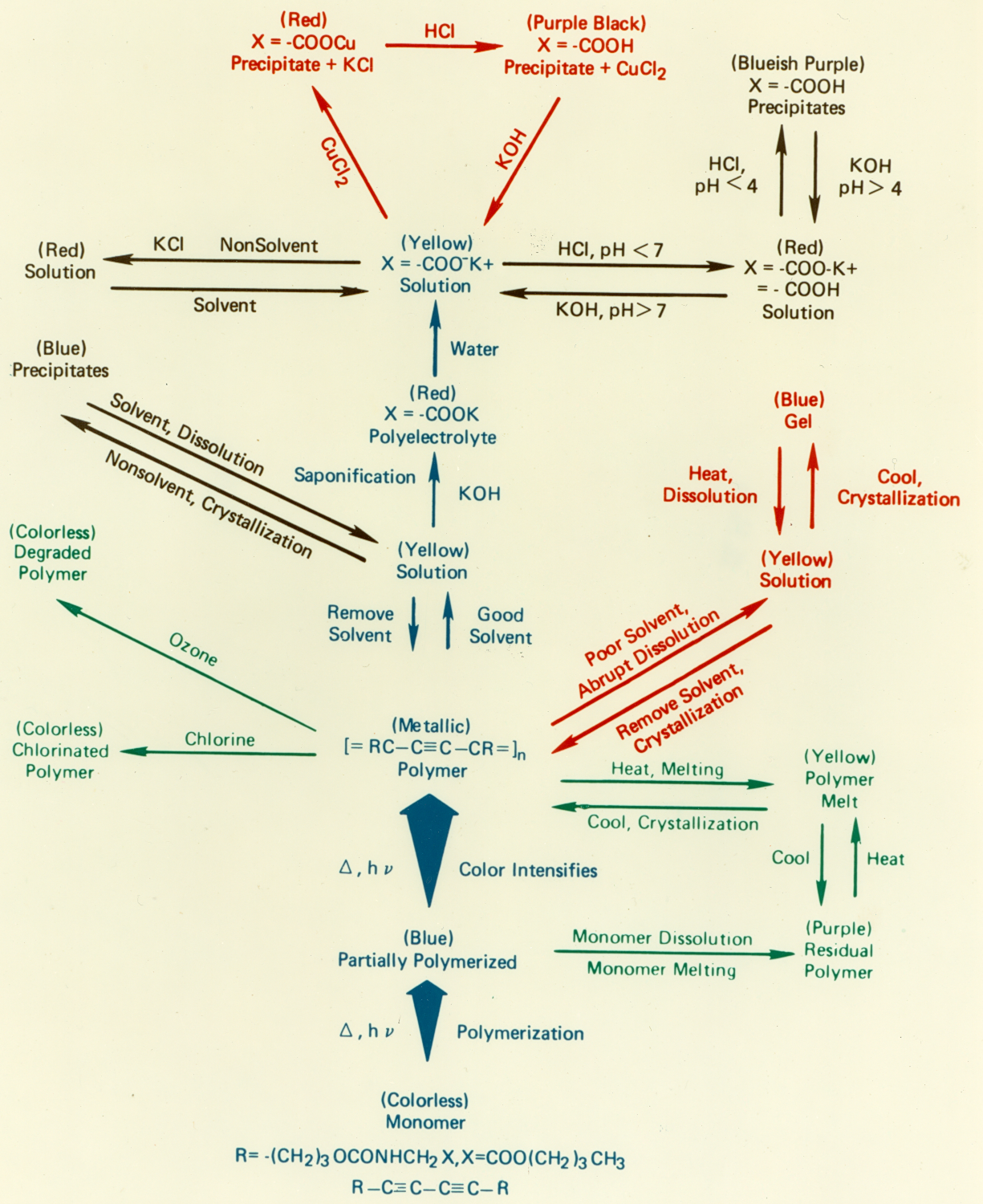
EFFECTIVE CONJUGATION AND COLOR OF PDA
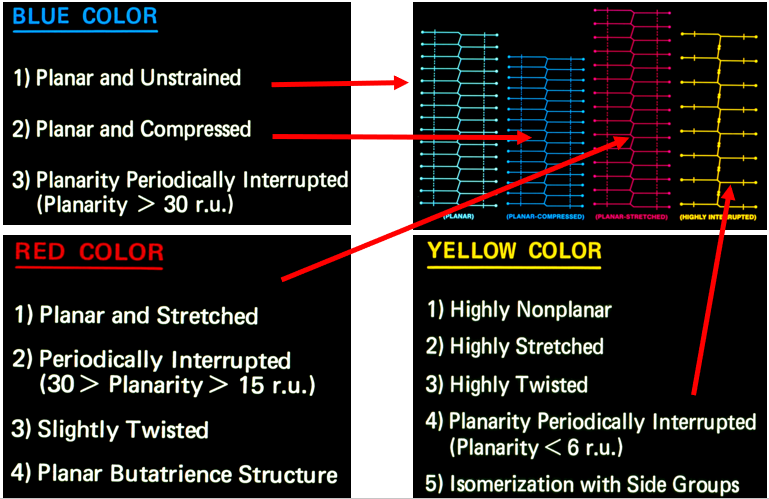
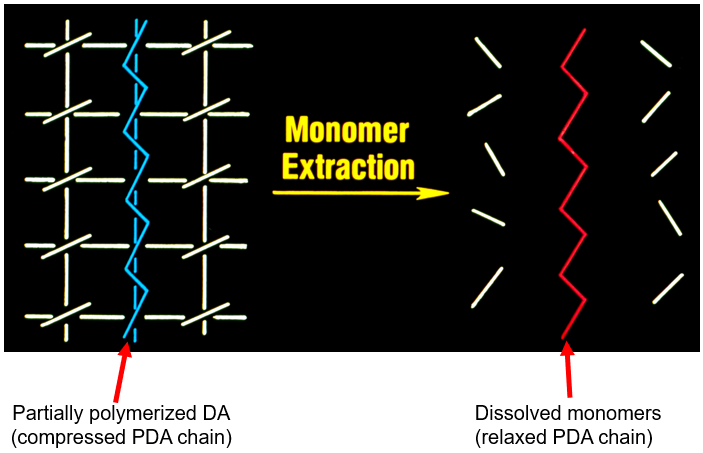
EXTRACTION OF UNREACTED MONOMER & COLOR CHANGE
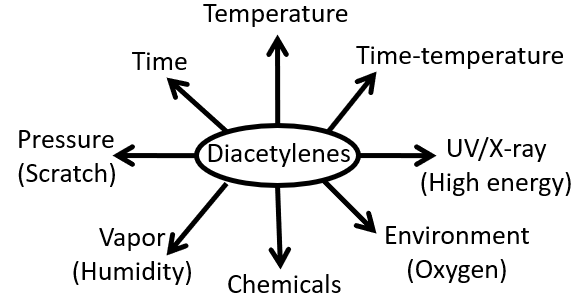
DA APPLICATIONS
Diacetylenes simultaneously respond to more than one parameters. E.g., Time, time-temperature, temperature, UV light, humidity, oxygen…
Diacetylenes don’t selectively respond to any one effect unless the other effects are blocked/minimized which is extremely difficult to do.
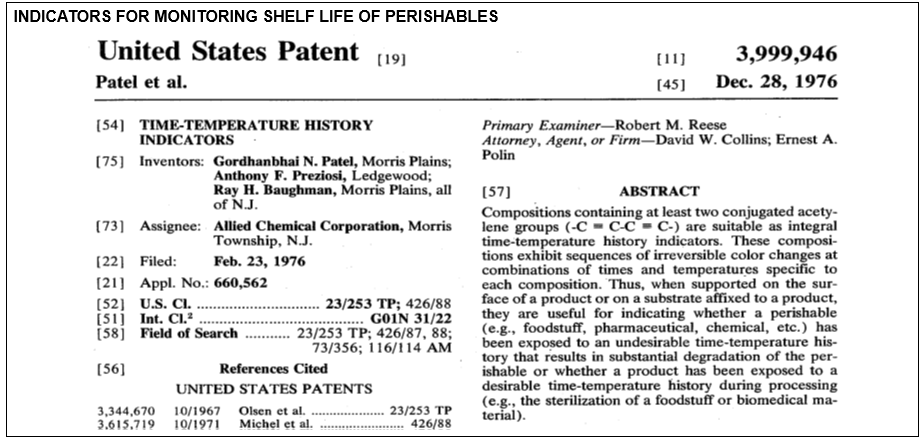
INDICATORS FOR MONITORING SHELF LIFE OF PERISHABLES
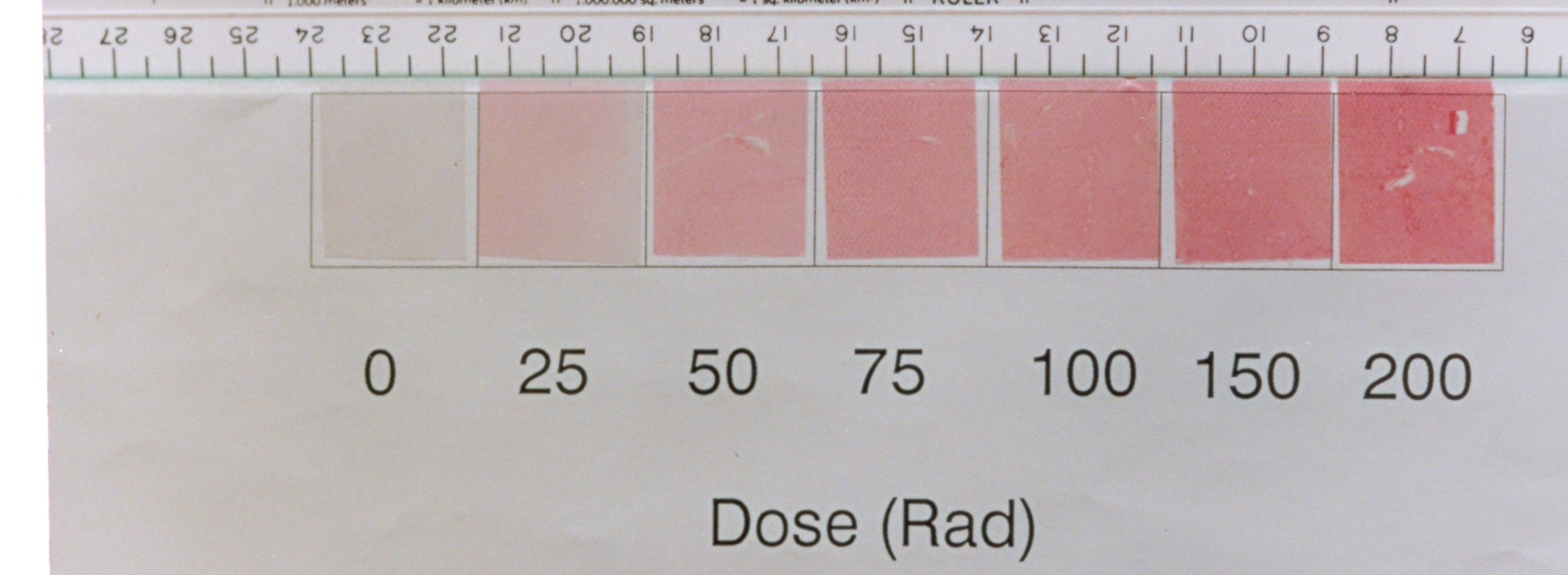
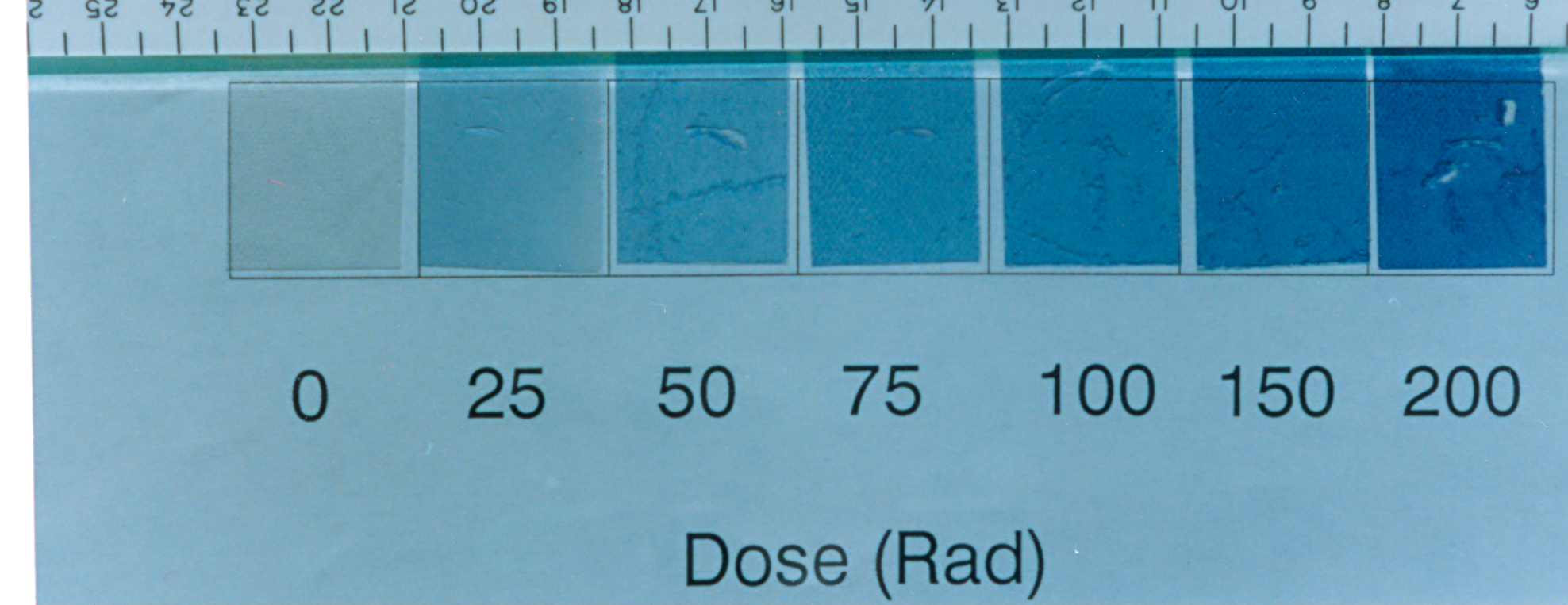
RADIATION DOSIMETERS
From the progress report of NIH/NCI SBIR phase I (1987/1988). The proposal was submitted in 1986.
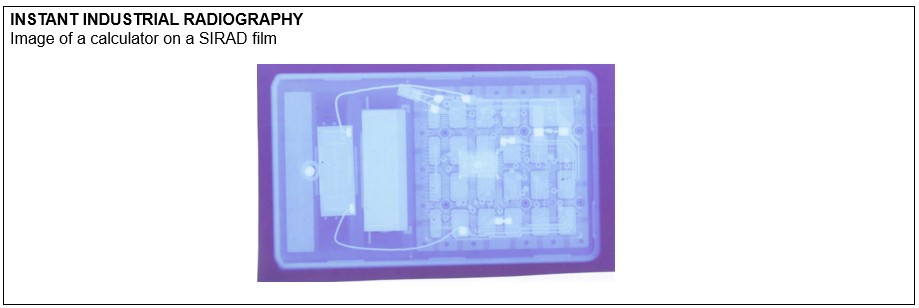
200 KeV AND 10 MeV X-RAY IMAGES OF A PHANTOM ON A DIACETYLENE FILM
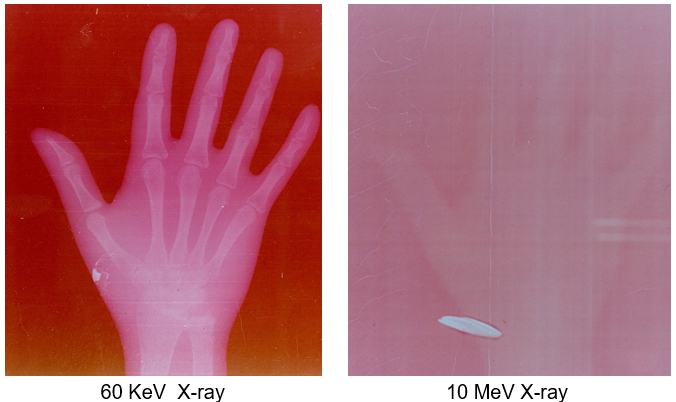
RADIATION THERAPY FILM
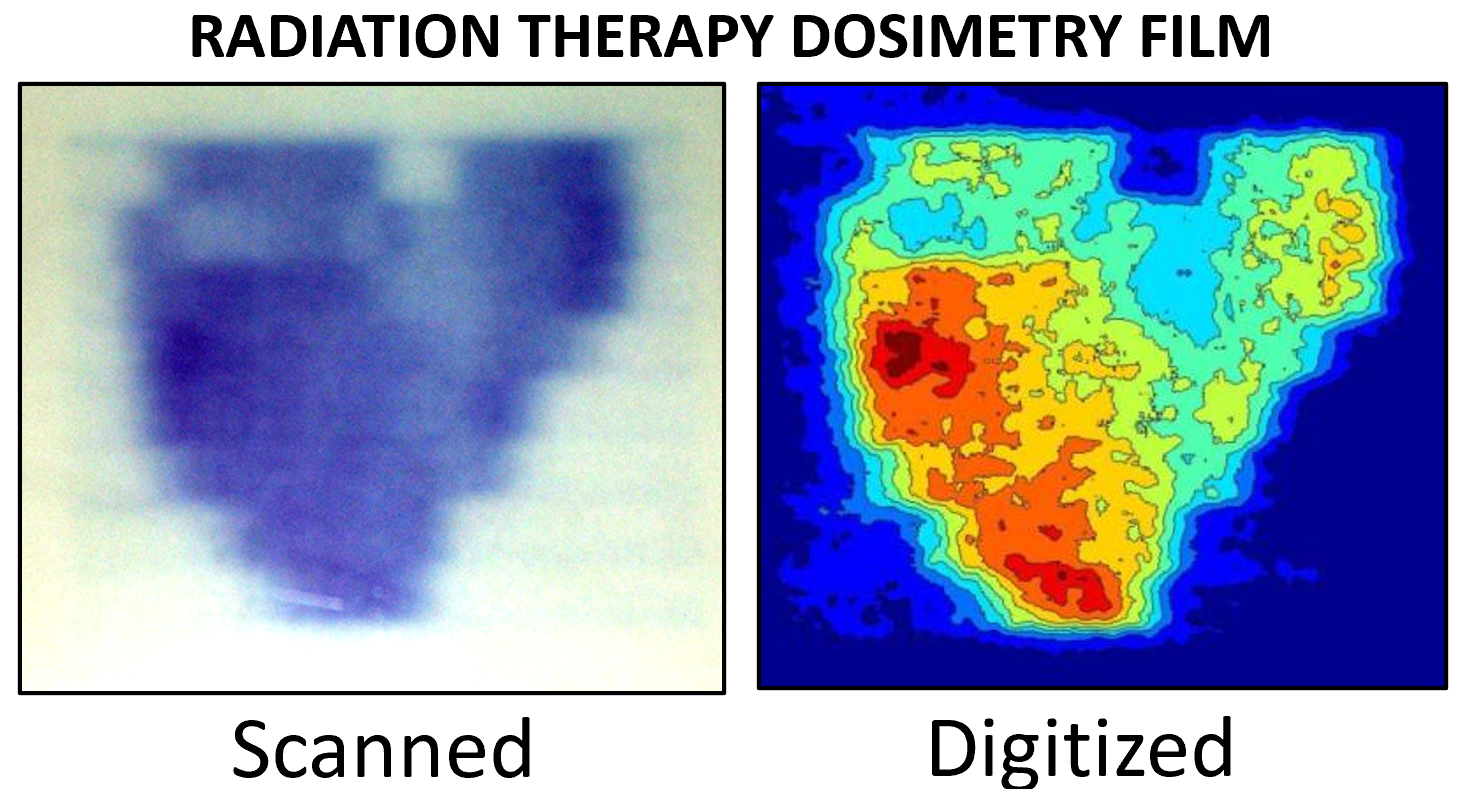
JP Labs pioneered the use of radiochromic film for monitoring radiation therapy (1987 - 1993) with funding from National Cancer Institute (USP #5,420,000). However, we were way ahead of our time and could not find a licensee or raise capital.
AN IDEAL EMERGENCY DOSIMETER
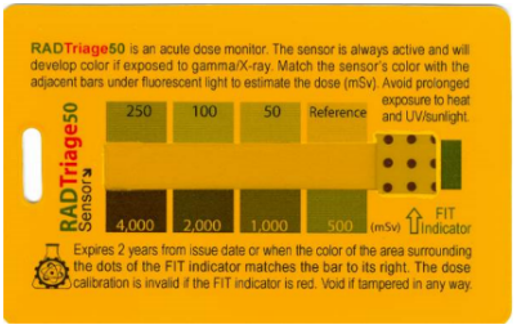
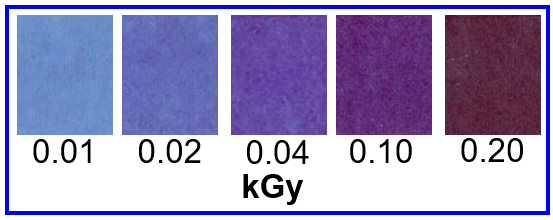
- The Sensor of the dosimeter instantly develops color and the color intensifies with an increase in dose.
- The color development is cumulative & irreversible.
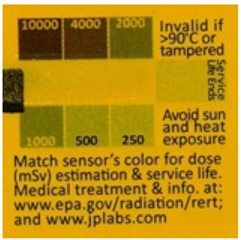
- Dose can be estimated by matching color of the sensor with that of adjacent color reference bars.
- Dosimeter monitors the medically significant dose (50 -10,000 mSv). It has an indicator to monitor false signals & shelf life.
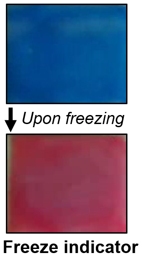
COLOR CHANGING FREEZE INDICATOR
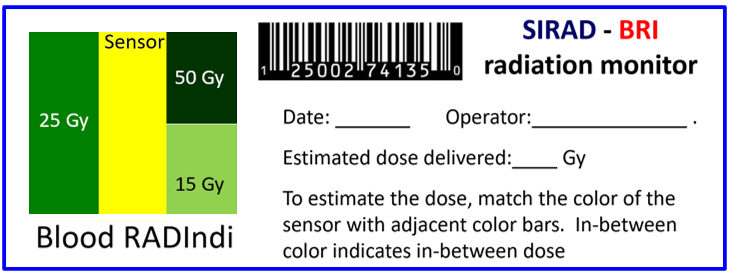
BLOOD RADIATION INDICATOR (BRI)
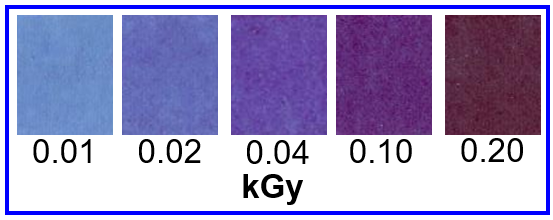
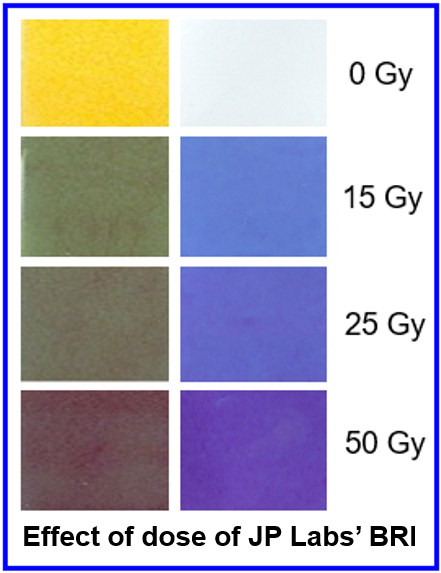
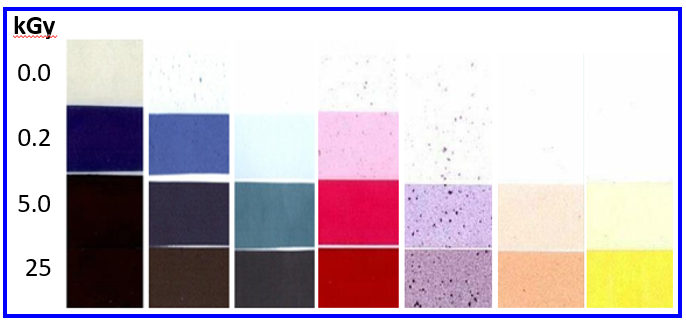
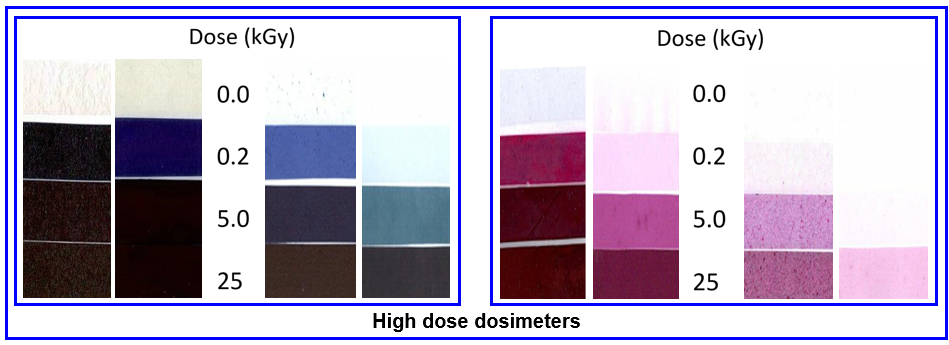
HIGH DOSE DOSIMETERS
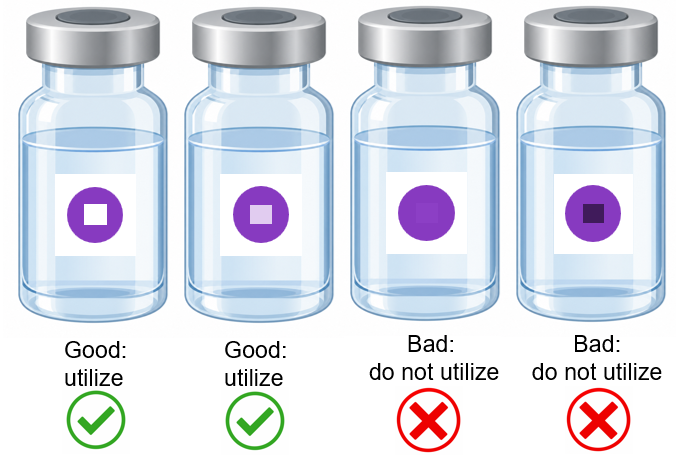
VVM (Vaccine Vial Monitors)