HIGH DOSE DOSIMETRY
Making radiation which can’t be seen/smelt/felt, visible
High-dose radiochromic and color-changing dosimeters are widely used in industrial processing to verify absorbed doses for food irradiation and medical supplies sterilization. Irradiation kills or sterilizes harmful germs, such as bacteria and molds, that spoil food and cause food poisoning and other illnesses. Food irradiation uses high-dose dosimetry (typically from 10 kGy to 100 kGy for decontamination and sterilization, and 1 kGy to 10 kGy for shelf-life extension and pasteurization) of food to ensure the absorbed dose is measured accurately and traceable to national standards.
High dose dosimeters based on (i) alanine-ESR, (ii) radiochromic dyes and (iii) polymerization of diacetylenes are commercially available and widely used. However, these and other similar dosimeters are sensitive to ambient conditions such as light and humidity and have very short shelf life and require expensive bulky readers.
Food and medical supplies are radiated with different dosages. Hence, dosimeters needed to cover a very wide dose range from 0.02 kGy to 100 kGy are required.
- Bulbs/tubers: 0.02 kGy – 0.2 kGy (20Gy – 200 Gy)
- Fruits/vegetables: 0.2 kGy – 1 kGy (200 Gy – 1,000 Gy)
- Grains, legumes, nuts etc: 0.25 – 5 kGy
- Fish/Sea foods: 1 kGy – 7 kGy
- Meet & poultry: 1 kGy – 7 kGy
- Spices, herbs, coffee, etc: 6 kGy – 14 kGy
- Military & space foods (sterilization): 5 kGy- 25kGy
- Sterilization of medical supplies 10 kGy – 100 kGy
We have developed high dose dosimeters to cover a wide dose range of 0.02 kGy to 100 kGy.
We have developed high dose dosimeters to cover with wide dose range.
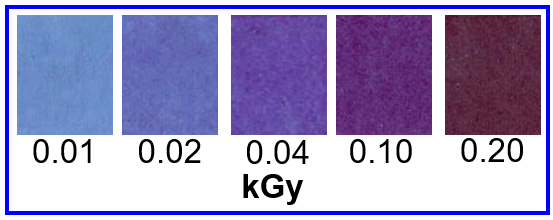
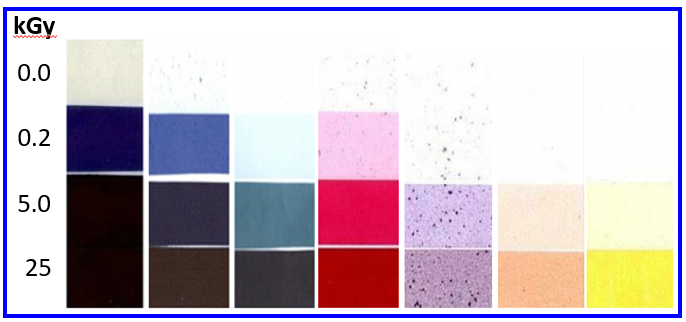
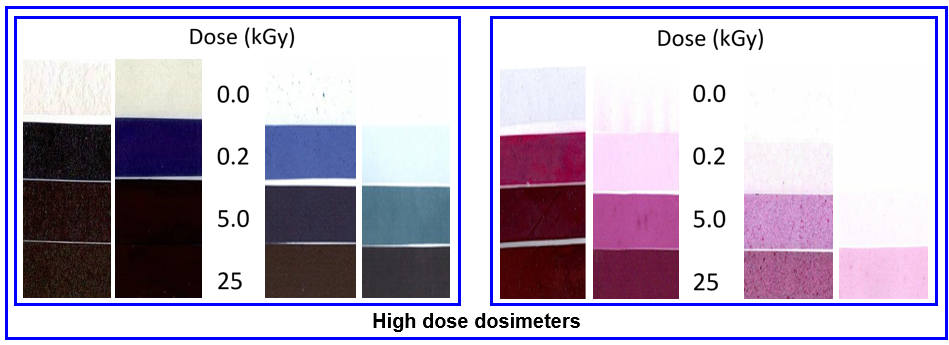
JP Labs dosimeters are essentially unaffected by ambient conditions such as ambient light and humidity and can be read with a cell phone.