RADIATION THERAPY FILM
Making radiation which can’t be seen/smelt/felt, visible
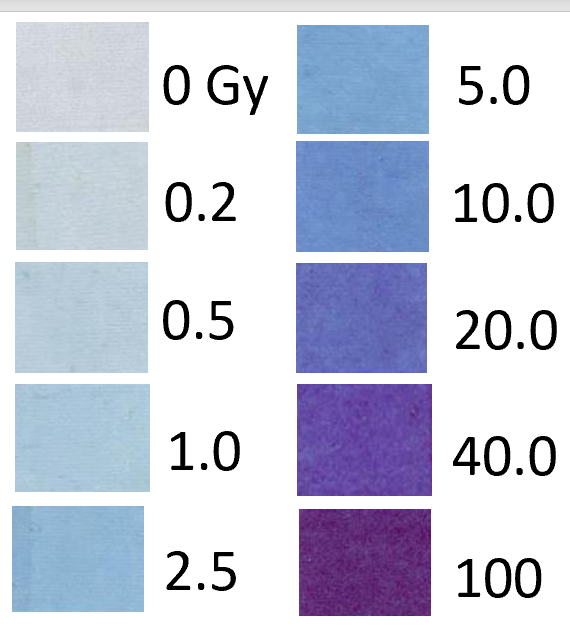
Radiochromic film is a self-developing, radiation-sensitive film used to measure and verify two-dimensional (2D) radiation dose distributions in radiation therapy and calibration of radiation sources. A coating of diacetylene monomers, when exposed to ionizing radiation such as X-rays and electrons, polymerizes into colored (typically blue) polydiacetylenes. The color intensity of the coating depends upon the exposure dose.
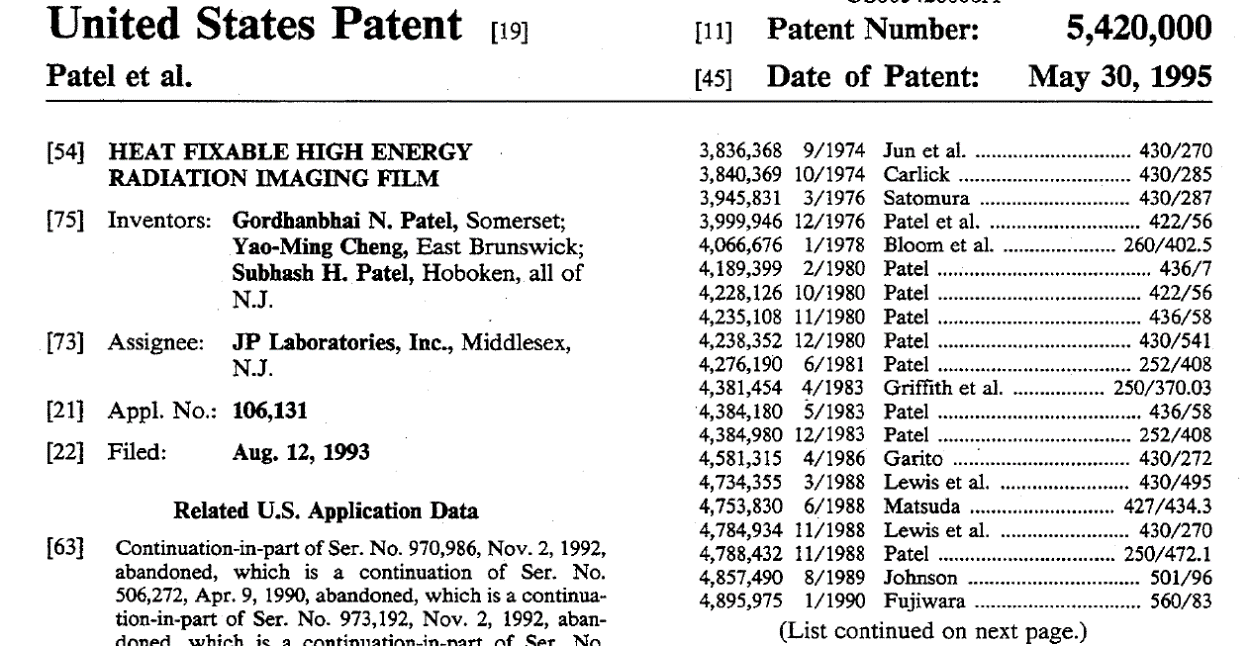
Though radiochromic radiation film is manufactured and marketed by Ashland Chemical today, the technology of monitoring ionizing radiation based on the solid-state polymerization of a diacetylene was pioneered by Dr. Gordhan Patel in the late 1970s. JP Labs pioneered the use of radiochromic film for monitoring radiation therapy (1987–1993), with funding from the National Cancer Institute (U.S. Patent #5,420,000). However, we were ahead of our time: flatbed scanners were not yet widely available, and we could not find a licensee or raise the capital required for manufacturing and marketing.
Pieces of a radiation therapy film radiated with different dosages of X-ray
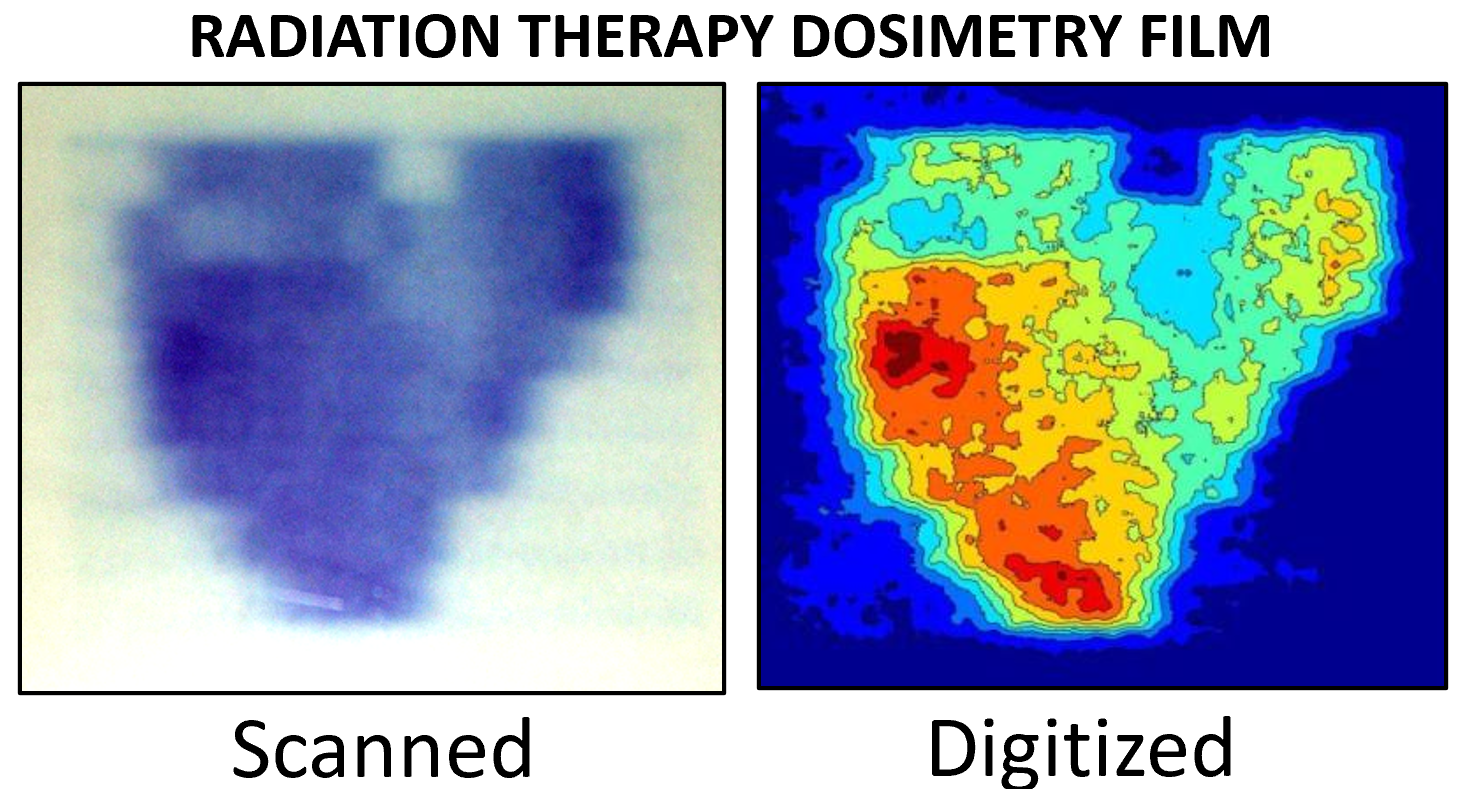
Over the past decades, we have made significant improvements to radiochromic film. JP Labs’ radiochromic film has a shelf life of at least one year at room temperature, requires no cold storage, can be handled under ambient light, is affected negligibly by even a day of UV or sunlight exposure, and is expected to be less expensive.