HIGH DOSE, 0.01GY TO 50kGY, RADIATION MONITORS

Making radiation which can’t be seen/smelt/felt, visible
RADIATION SENSITIVITIES OF DIACETYLENES

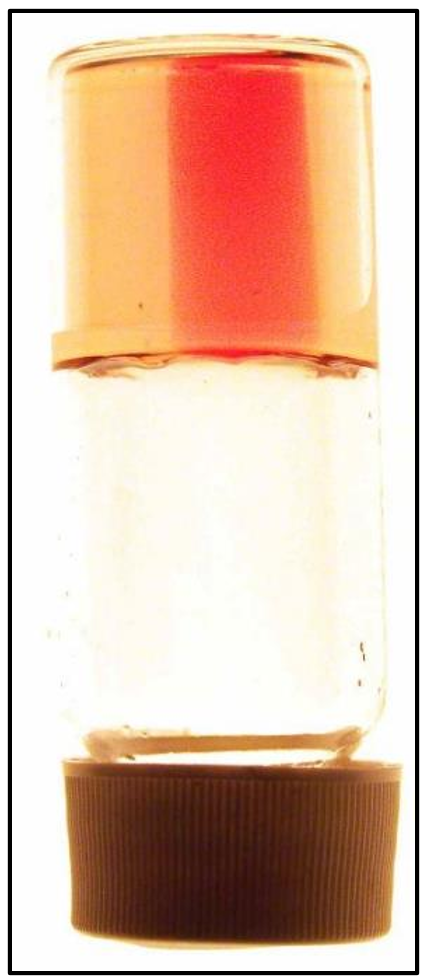
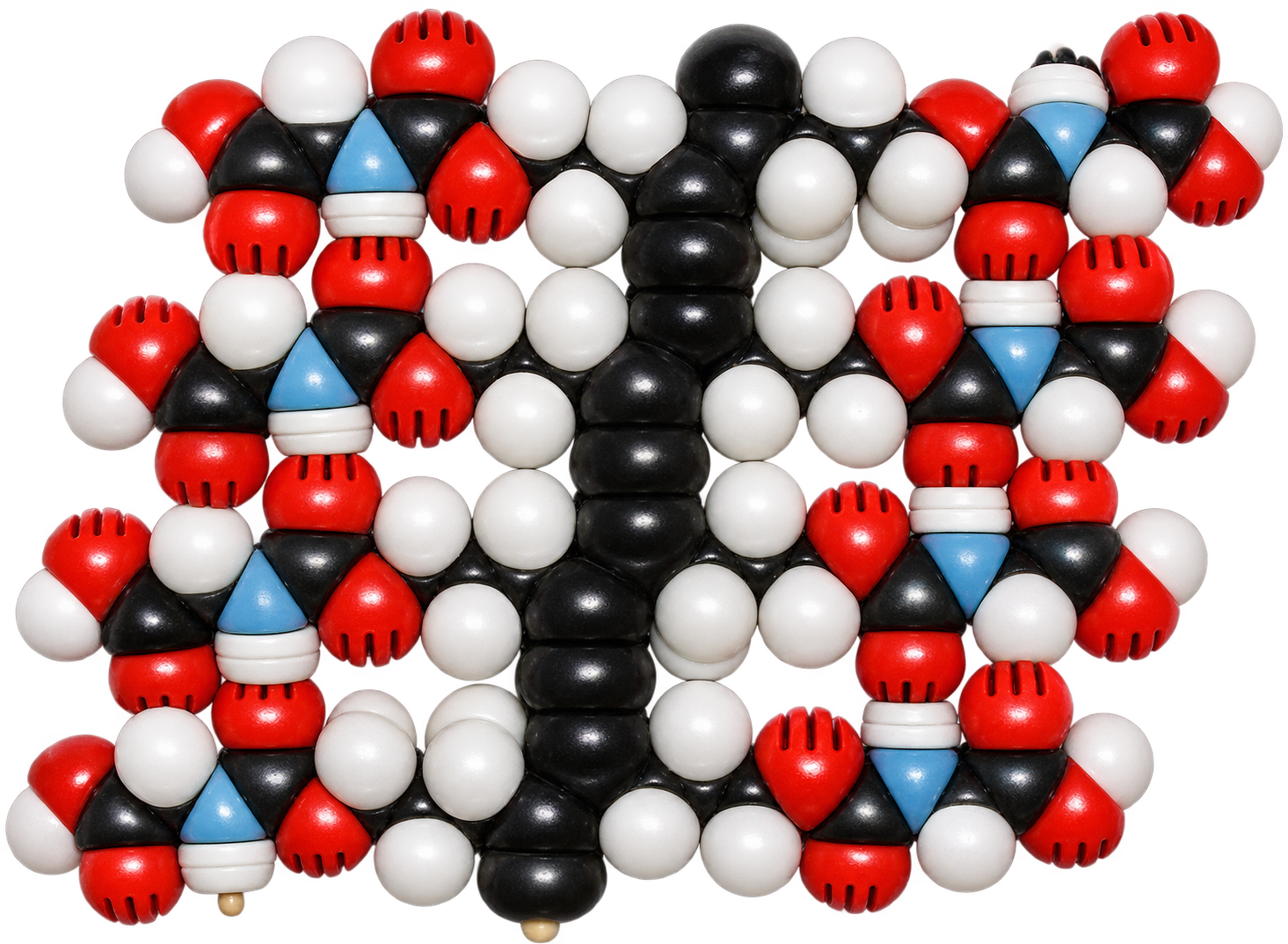
Diacetylenes  (R-C≡C-C≡C-R) instantly polymerize only in the solid state to colored polymers (polydiacetylenes) upon exposure to ionizing radiation and heat. Hence, they can be used for monitoring radiation and time-temperature.
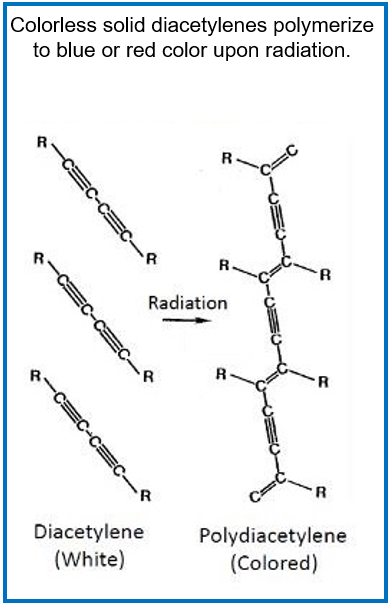
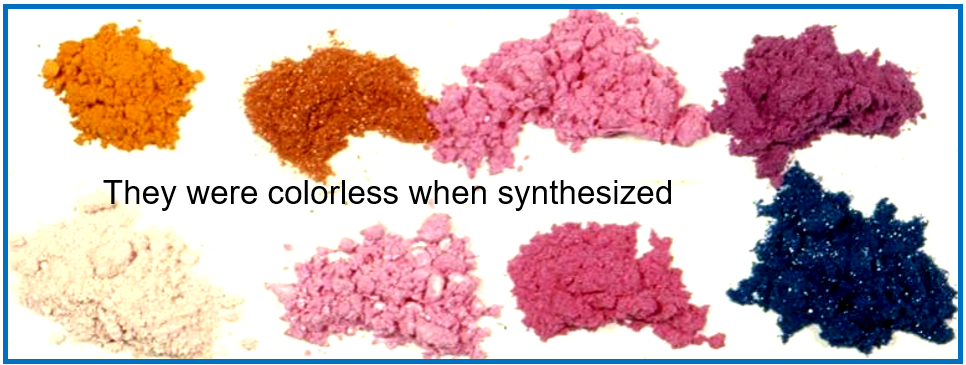
Chemical diagram showing diacetylene polymerization into a coloured polydiacetylene Diacetylene samples in different colours after polymerization

Different diacetylenes with varying levels of sensitivity (0.02 Gy to 50 Gy) are selected to meet the specific requirements of different applications.
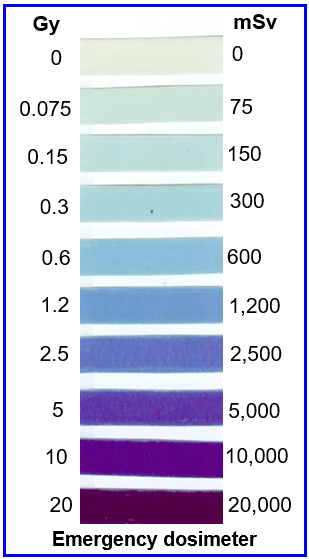
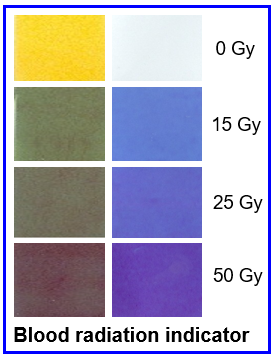
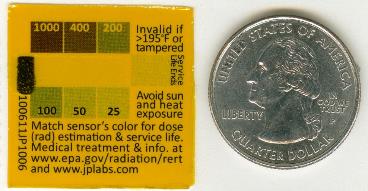
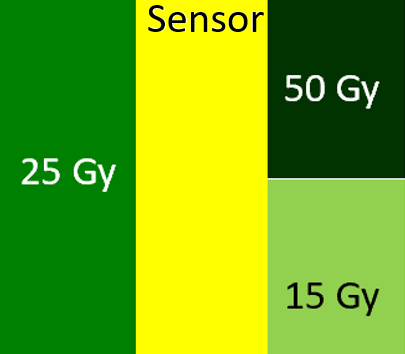
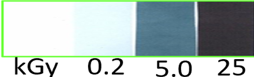
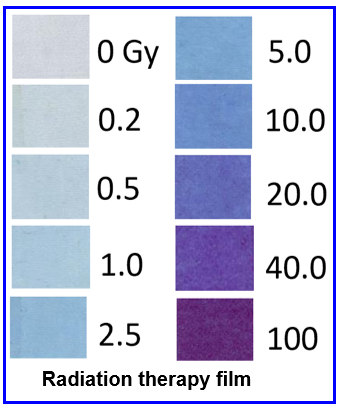
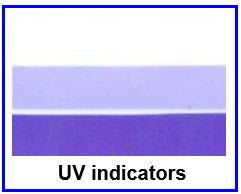
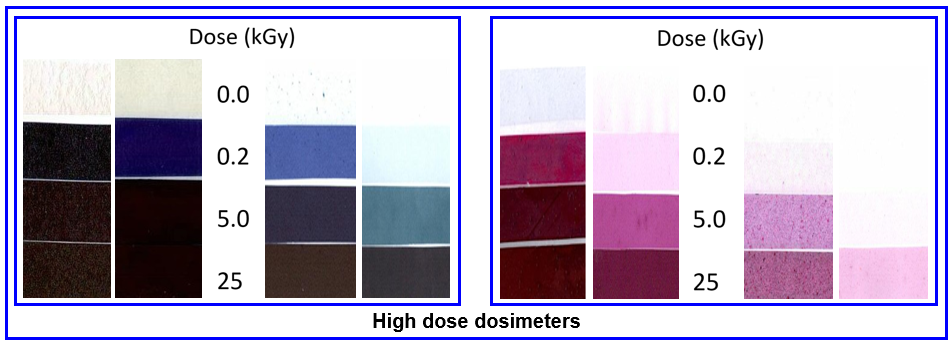
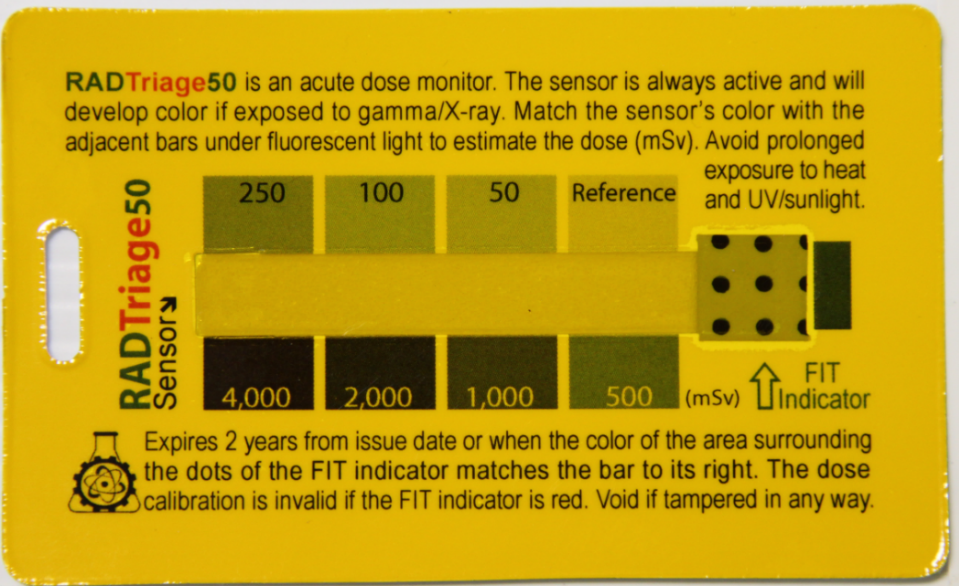
Emergency radiation dosimeter scale from 0 to 20,000 mSv Blood radiation indicator dose scale from 0 to 50 Gy Radiation therapy film dose scale from 0 to 100 Gy UV indicator colour scale High dose dosimeter colour response chart across kilogray dose ranges

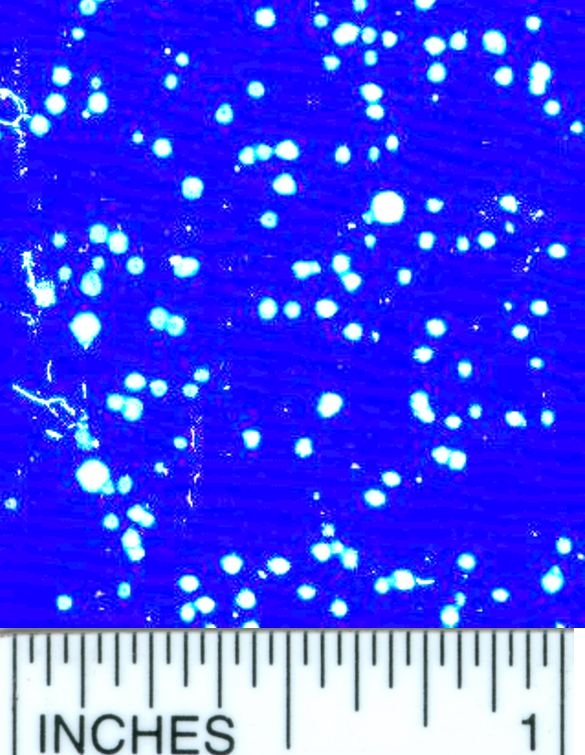
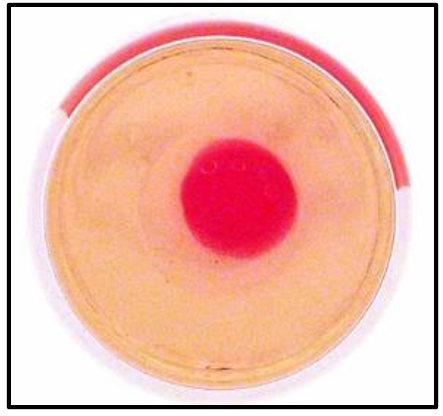
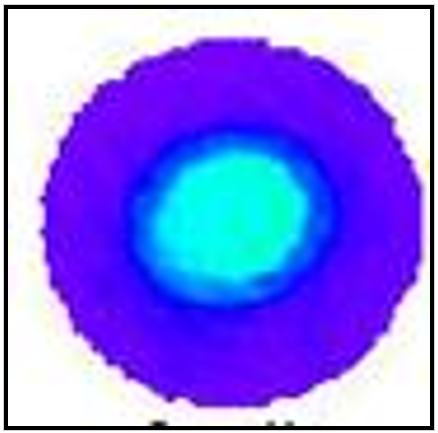
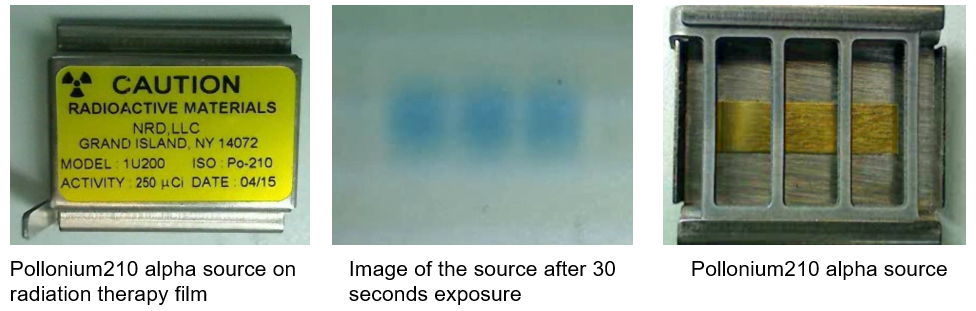
MONITORING ALPHA PARTICLES

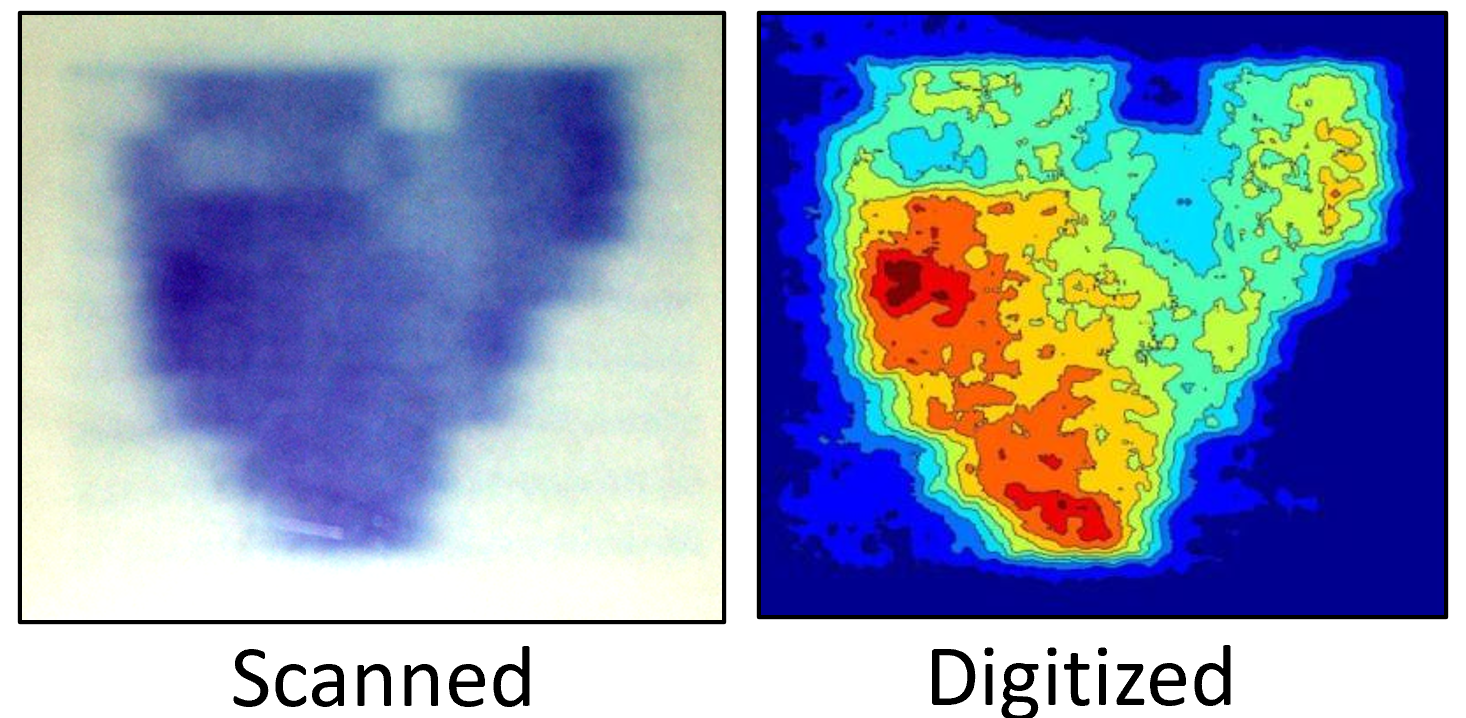
Polonium-210 alpha source, image of the source after 30 seconds exposure, and a second Polonium-210 alpha source

COLOR DEVELOPING RADIATION DOSIMETERS

  • Materials: Specialty diacetylenes.
  • Colors: Colorless to blue, purple or red.
  • Dose ranges:
    • ~20 mSv (0.02 Gy) to 10,000 mSv (10 Gy) for personal emergency radiation dosimeters e.g., RADTriageTM.
    • 10 Gy to 100 Gy for blood radiation indicators.
    • 0.02 kGy to 5 kGy for monitoring radiation of tubers, fruits, vegetables, grains, legumes and nut.
    • 1 kGy to 10 kGy for monitoring radiation of meets and fish.
    • 5 kGy to 20 kGy for monitoring radiation of spices.
    • 5 kGy to 50 kGy for monitoring sterilization of medical supplies.
  • Shelf-life: 2 to 5 years at room temperature.
  • Effect of UV/sunlight: Negligible. Little effect of 1 day of sunlight.
  • Effect of humidity: None to negligible.

COMPETITION

  • Affected by ambient conditions: Very sensitive to ambient conditions such as UV/sunlight and humidity.
  • Cold storage requirements: Products are based on diacetylenes having low melting point (~60oC) and hence require cold storage. The shelf life of months at room temperature.
  • Expensive raw materials: Multi-step, complex synthesis and purification and hence expensive.

JP LABS’ DOSIMETERS

  • Effect of ambient conditions: Essentially no effect of room ambient light, negligible effect of sunlight for one day and none to negligible effect of ambient humidity.
  • Shelf-life: Products are based on diacetylenes having high melting point (>100oC) and hence require no cold storage. The shelf-life is at least two years at room temperature.
  • Affordable raw materials: Single-step synthesis of high purity, high yield diacetylenes from the raw materials.

JP LABS’ DOSIMETERS - FULL DOSE RANGE

  • 0.01 mSv – 10,000 mSv: RADTriage-TLD/OSL.
  • 20 mSv – 10,000 mSv/10 Gy: Emergency dosimeters, RADTriage.
  • 10 Gy – 50 Gy: Blood radiation indicator.
  • 1 Gy – 100 Gy: Radiation therapy film.
  • 0.1 kGy – 5 KGy: Radiation of foods.
  • 5 kGy – 50 kGy: Radiation of medical supplies
  • (1 Gy = 1,000 mSv)

ESTIMATED GLOBAL ANNUAL MARKETS FOR RADIATION MONITORING DEVICES

  • RADTriage, RADSticker, RADTriage-TLD emergency radiation dosimeter, manufactured by JP Labs - potentially $10M.
  • Blood radiation indicator: $20M
  • Radiochromic film: $50M to $200M
  • Radon device: $100M to $500M
  • UV indicator: $1M to $50M

•  WHAT IS OFFERED?

  • A large package of five products for radiation monitoring (energy from UV to gamma ray and dose from 0.1 mSv – 50kGy).
  • Most of the products are based on small number of compounds, diacetylenes.
  • Strong IP: Issued and pending patents and decades of trade secrets.
  • Highly equipped lab facility (including pilot coater) for technical assistance.
  • Manufacturing of emergency dosimeters, RADTriage and RADSticker.
  • Name recognition: Products, inventor and awards.
  • Five decades of expertise of the pioneer and inventor, Dr. Gordhan Patel.